Electricity prices in December – a quarter lower than last year, mainly thanks to wind energy
In December, the average price of electricity in Latvia fell by almost a quarter compared to November, reaching 8.4 cents/kWh. The decrease can be explained by moderate weather conditions and an increase in wind energy production. Compared to December last year, the price of electricity was 7.2% lower.
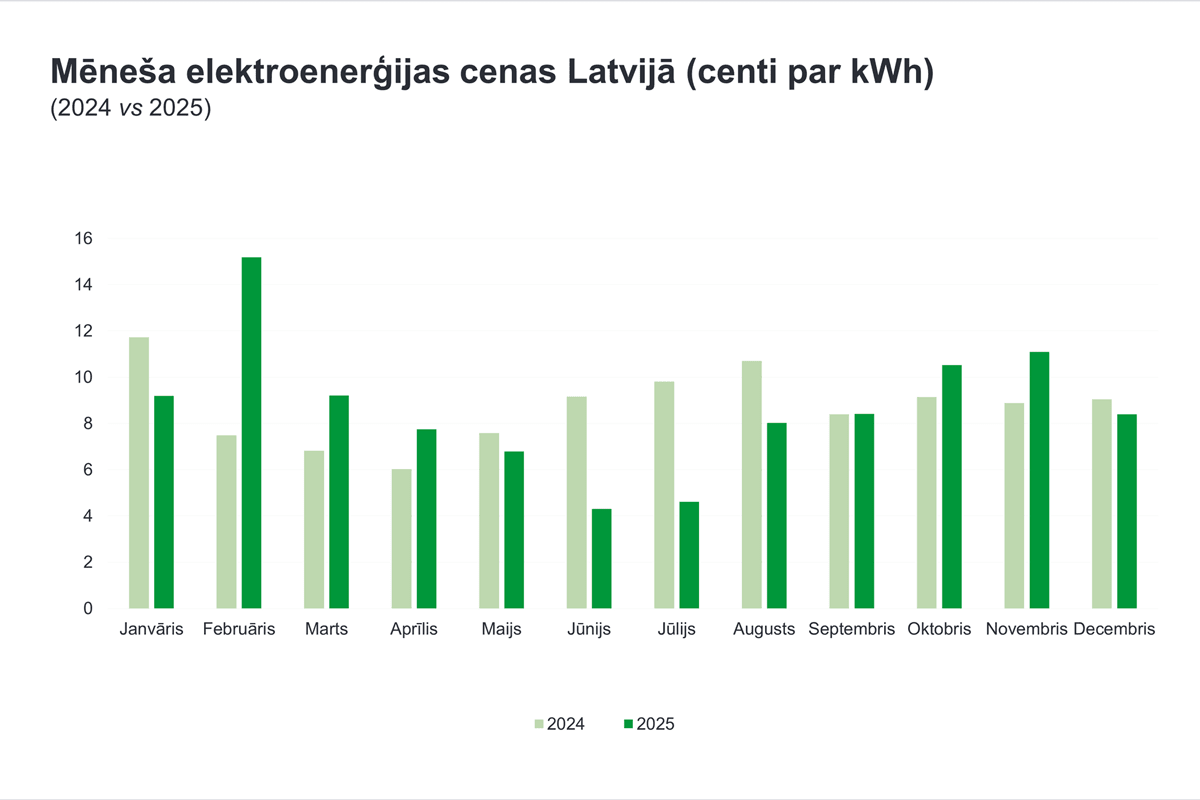
Low prices in December were mainly due to very strong wind energy production in Lithuania and Estonia. In addition, Latvia's hydropower production has begun to grow more rapidly, accounting for almost half of Latvia's total consumption in December. This helped to reduce the price of electricity for everyday consumers with exchange tariffs. For comparison, over the last 10 years, hydroelectric power plants have provided an average of 38% of Latvia's electricity consumption. Approximately one-fifth was produced by gas-fired power plants, and the same amount was imported from Estonia and Lithuania. These two Baltic countries are connected to Scandinavia: Estonia via Finland and Lithuania via Sweden, which is why electricity in Latvia also comes from the Nordic countries.
2025 in Latvia: production dynamics remained unchanged compared to the previous year, but prices were lower
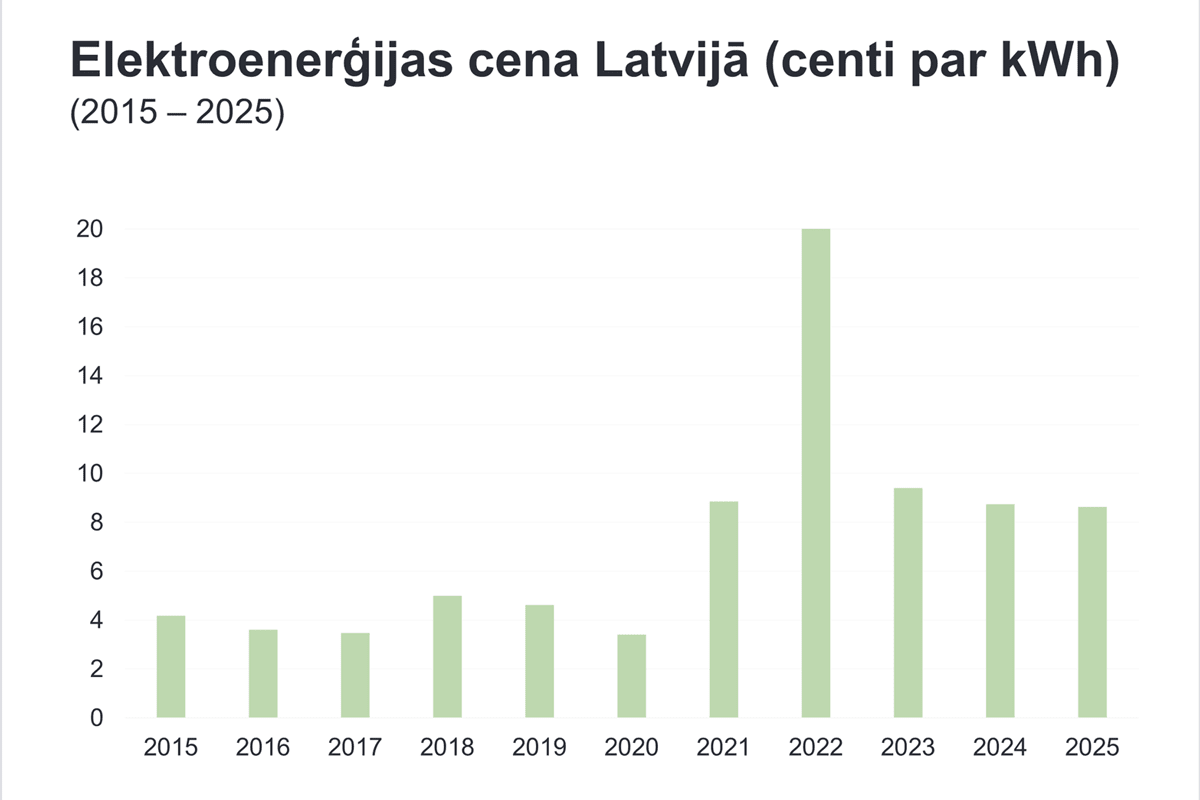
Looking back at 2025 as a whole, production dynamics remained unchanged compared to the previous year, but the average price of electricity was lower. The average price of electricity in Latvia in 2025 was 8.62 cents per kWh. This is 0.11 cents less than in 2024 and almost 1 cent less than in 2023. Since 2020, electricity prices in Latvia have experienced sharp rises and falls, driven by the 2022 energy crisis, interruptions and restrictions in the Finland-Estonia connections, increased balancing costs, CO₂ price increases, and a volatile gas market. However, despite these factors, prices have remained relatively stable overall, with a three-year average price of 8.92 cents per kWh. At the same time, today's prices are significantly different from those in the pre-crisis period: in 2020, the average price was only 3.4 cents per kWh. Fossil fuel production costs have increased significantly compared to the pre-crisis period, but reasonable price levels have been maintained thanks to the rapid development of solar and wind farms.
With prices remaining relatively stable, Latvia's energy balance has undergone changes, albeit not as significant as in the rest of the Baltic States. While variable renewable energy (solar and wind) accounted for only 1-4% of Latvia's total demand, the share of these resources has begun to increase since 2024. In 2024, these resources accounted for almost a tenth of Latvia's demand. This year, it is already 15%. Although Latvia has plans to expand its renewable energy resources, it remains to be seen whether economic conditions in the energy markets will actually allow for the development of additional renewable energy projects.
Overall, Latvia produced 5.78 TWh of electricity in 2025, which is 2% less than in the previous year, but almost 5% more than the average for the last five years. As usual, hydroelectric power accounted for the largest share, but wind and solar power are rapidly increasing their share. For example, in 2025, 2.93 TWh of hydroelectric power was generated, while 0.875 TWh of wind and solar energy was supplied to the grid.
What could happen next month and next year?
"Prices will depend on weather conditions, the availability of imported energy from the Nordic countries, and, in particular, the production of cheap wind energy. If imports are limited and the wind is weak, we may experience a month similar to February last year, when prices averaged 15.2 cents per kWh and the market was more influenced by more expensive energy production, for example, from Estonian oil shale or gas power plants. If the wind is very strong and imports are available, we can expect lower prices," predicts Romāns Tjurins, Head of Market Research and Analysis at Enefit.